
- Home
- Support
- Design Information
- Demo Videos
Demo Videos
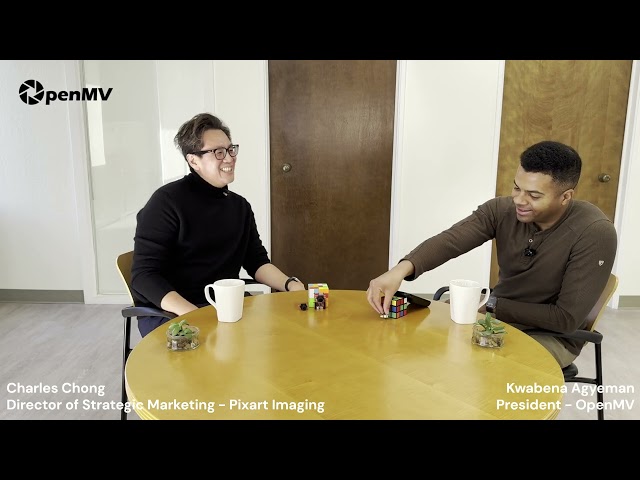
OpenMV N6 & AE3 - Interview with Charles Chong from PixArt Imaging
Join Kwabena, President of OpenMV, as he sits down with Charles Chong, Director of Strategic Marketing at PixArt, to uncover the PixArt camera sensors powering the OpenMV N6 and AE3. Don’t miss out—dive deeper into the OpenMV N6 & AE3 now! The OpenMV N6 and AE3 come equipped by default with the PAG7936, a 1 MP (1280x800) 120 FPS Color Global Shutter camera sensor. For high-resolution imaging, OpenMV also offers the PS5520, a 5 MP (2592x1944) Color Rolling Shutter camera sensor from PixArt.
Having trouble playing the video above? Click here.
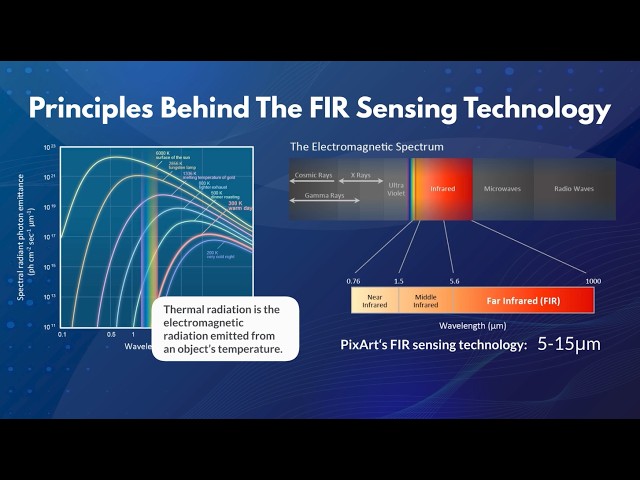
Introduction to FIR Technology
This video is the first episode of the Far Infrared (FIR) sensor series, focusing on the basic concepts of FIR and highlighting the differences between traditional thermistor and FIR thermopile.
Having trouble watching the video above? Click here.
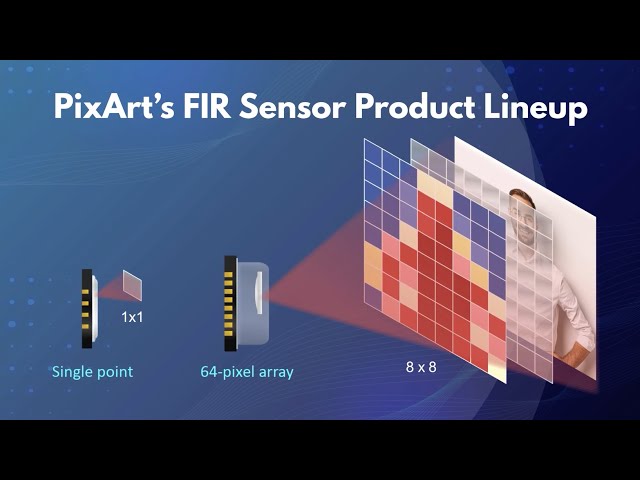
PixArt's FIR Products
This video is the second episode of the Far Infrared (FIR) sensor series, introducing PixArt's range of FIR sensor product lines. In addition to single point and 64-pixel array sensors, PixArt also provides a powerful 3-in-1 evaluation board that integrates a range of automated thermal detection functions.
Having trouble watching the video above? Click here.
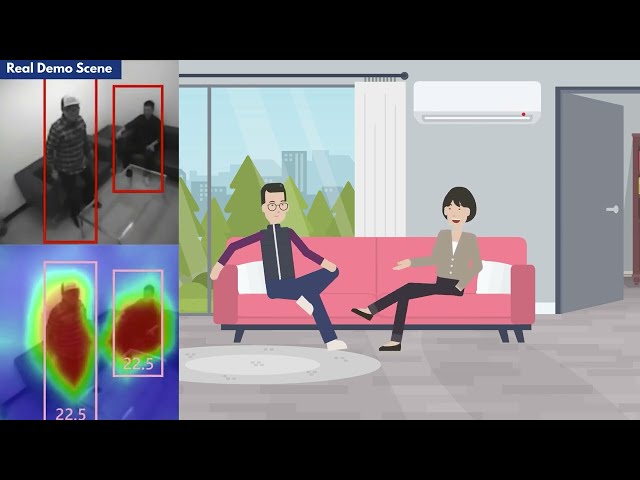
FIR Applications and Demo Clips
This video is the third episode of the Far Infrared (FIR) sensor series, featuring demonstrations of 3 FIR sensors. In addition to showcasing real-life scenarios using PixArt’s FIR sensors, it also introduces various applications in different fields.
Having trouble watching the video above? Click here.
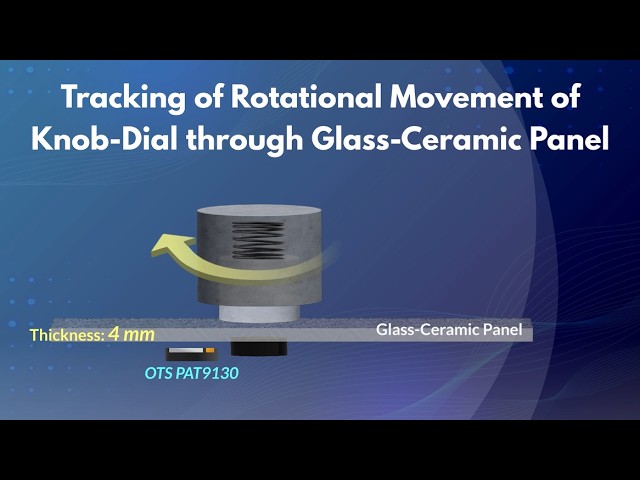
Optical Tracking Sensing Enables Precise Interaction on Glass-Ceramic Panels
This video presents PixArt’s PAT9130 optical tracking sensor, demonstrating stable and precise tracking on a metal surface through glass-ceramic panel. A magnetic knob design enables a clean integrated interface with rotation, press, and lift controls. An induction cooker demo shows temperature adjustment, power control, and status detection, delivering an intuitive user experience.
Having trouble watching the video above? Click here.
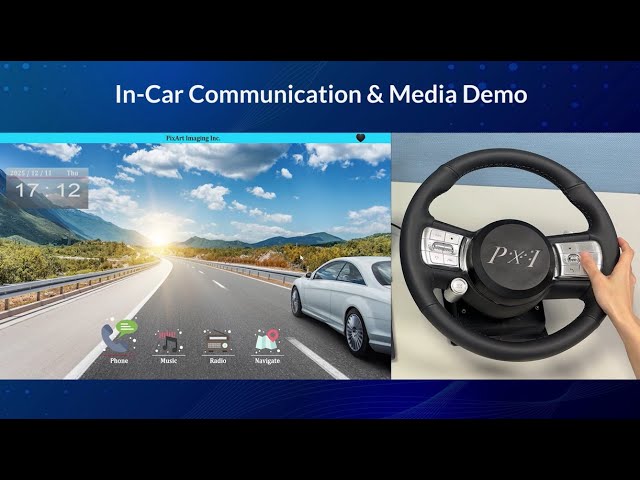
Explore how Optical Finger Navigation is applied in automotive settings!
This video demonstrates the capabilities of PixArt's Optical Finger Navigation (OFN) technology in automotive applications. It shows how OFN can be used on the steering wheel to operate phone calls, music, radio, and maps using finger swipes.
Having trouble watching the video above? Click here.
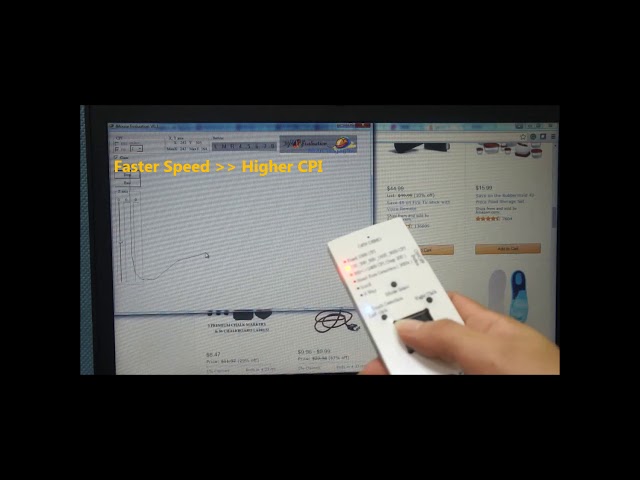
Optical Finger Navigation Technology for Constraint Workspace
PixArt's Optical Finger Navigation series are built to provide full flexibility on space constrained smart controller interfaces. Incorporate our free-/2-/4-/8-direction navigation technologies with smart TV controllers, automotive media systems, steering wheels, laptops and medical devices to deliver amazing user experiences any where, any time.
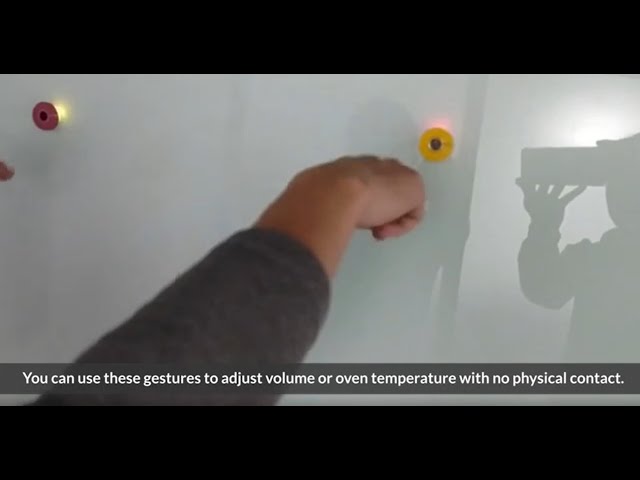
Macaron Demo: A Compact and Efficient Gesture Recognition Solution
Macaron demo features PixArt’s PAG7631 single-object gesture sensor with real-time LED feedback and Bluetooth Low Energy connectivity. It supports intuitive swipe and rotation gestures, operates as a standalone device, and offers magnetic mounting and wireless charging for flexible integration across smart home, appliance, and automotive applications.
Having trouble watching the video above? Click here.
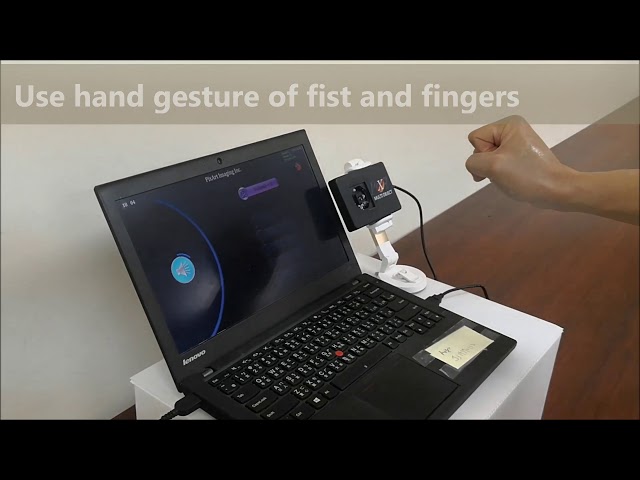
Multi-Finger Gesture Control for Automotive Application
An infotainment system with an in-built PixArt Gesture Recognition sensor similar to what we demonstrate in this clip allows drivers to control their sophisticated media system without the need to touch the infotainment screen. This control technology not only offers futuristic approach to the car, but helps to reduce driver distraction while driving.
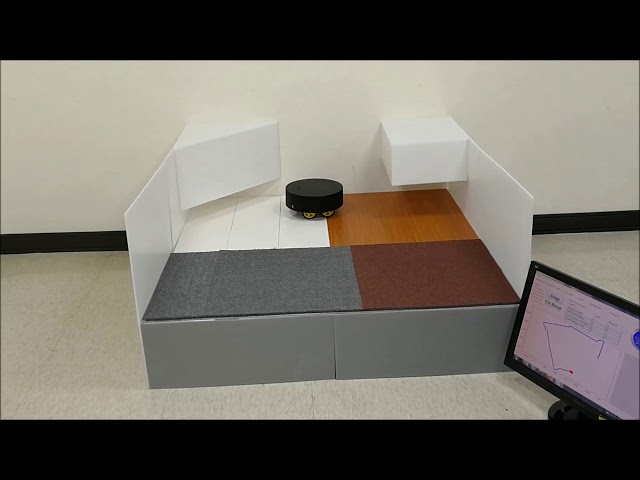
Mobile Robot Navigation
Cleaning robots, service robots, autonomous guided vehicle and other automated movable devices all rely heavily on tracking sensors for their route mapping and positioning processes. With the presence of PixArt's quality Optical Tracking Sensor that continuously return accurate path tracking and planning results, the performance of the devices can be significantly enhanced.